Top 10 Tips When Evaluating Qualified Technicians For The PAT in Hinckley
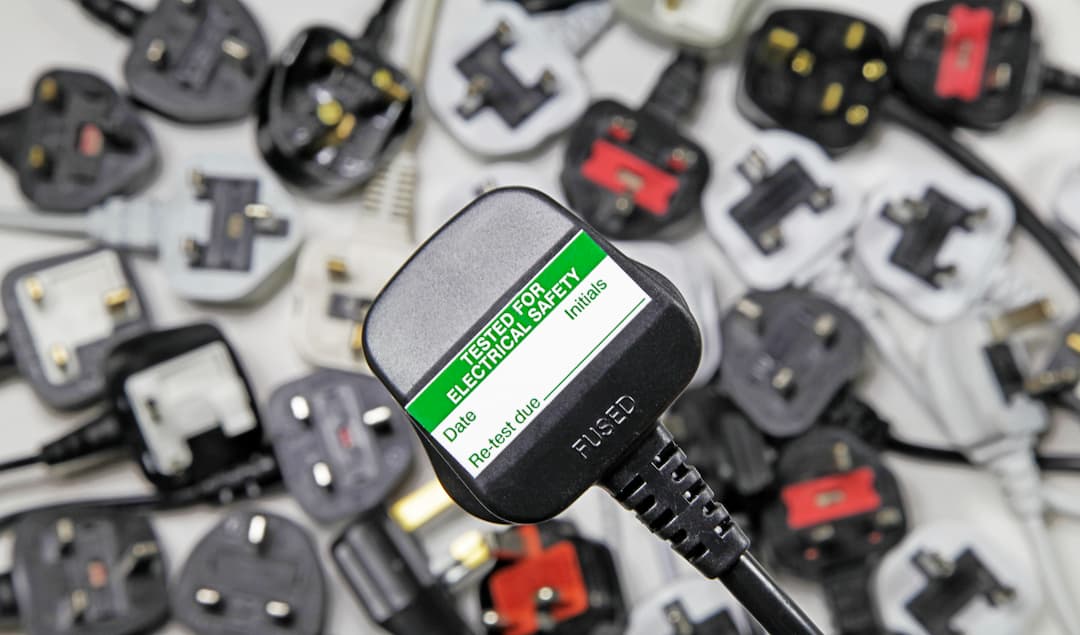
The ability of the tester to conduct Portable Appliance Testing represents a critical factor for transforming the mechanical testing method into one that can be legally defended. There there is no licensing or any legal requirements for PAT testers under UK law. Regulation 16 says that persons are required to have "technical competence or know-how" to avoid injuries and harm. The principle of "competence" puts the entire responsibility on the duty holder (employer) to select and select technicians who show a mix of formal training, hands-on expertise, and sound judgment. Since there is no requisite qualification, the market is able to offer several levels of capability. This makes it important employers understand how they can determine if the skills of a technician go beyond just a certificate. A certified technician is knowledgeable about the principles of electrical safety, is able to discern results accurately, and make informed decisions about pass/fail using the IET Code of Practice and provide valuable risk assessment insights.
1. The EAWR 1989 Definition of Competence in Hinckley
Regulation 16 in the Electricity at Work Regulations of 1989 stipulates that a worker's ability to perform their job is essential to avoid injuries or risk. HSE defines competency as the ability to perform a task in a safe and efficient method without putting yourself or anyone else at risk. This is a combination three factors that include understanding (theory) and knowledge (practical application) and understanding (the system and the appliances they test) and a safe working environment. Technicians must possess the three components to be considered legally proficient.
2. The formal qualifications must be accompanied by a demonstrable level of competence. in Hinckley
There is no legal requirement that a qualification be earned. But formal education will provide the most concrete evidence of knowledge. City & Guilds' 2377 qualification ("In service inspection and testing of Electrical Equipment") is the most widely recognized industry standard. The certificate itself does not confer competence. It has to be taken with experience gained through practical work. The duty holder must look for both a relevant certification and evidence of previous experience. Technicians must have extensive experience to prove their skills.
3. City & Guilds 2377 Qualification – What is it?
The City & Guilds 2377 is an IET Level 3 qualification that assesses a candidate's knowledge of the IET Code of Practice and their ability to carry out examinations and tests with accuracy. The City & Guilds 2377 exam is offered in two different parts. 237777 (theory multiple-choice test based on theory) and 237778 (practical assessment). The entire award demonstrates that the technician has been independently assessed on both their understanding and their practical abilities. Asking for the certificate's number is a great method of confirming this certificate.
4. It is essential to have hands-on practical Experiential Learning in Hinckley
The theory is useless without being able to use it. Technicians who are skilled should have extensive hands-on experience using a variety appliances in different settings. They are able to spot faults that a novice may miss, work in environments such as construction sites and industrial facilities, and work with equipment safely. To assess the suitability of the testing background, dutyholders should ask prospective providers or technicians about their experience.
5. Experience with the IET Code of Practice For In-Service Inspection and Testing
The IET Code of Practice (Code of Practice) is the standard for all PAT testing. A qualified technician must not only have an original copy, but should possess a thorough, practical understanding of its contents. This means knowing the various categories of equipment, the ordering of visual tests and inspections and how to properly utilize the test equipment. It is crucial that they know how to refer and use this guidance correctly.
6. Understanding and Calibration of Test Instruments
A professional technician who is knowledgeable knows that the equipment they use is crucial to getting accurate results. They should be aware that their PAT tester has to be regularly calibrated (typically every year) by a UKAS-accredited laboratory to ensure its readings are accurate. The device should have an up-to-date calibration certificate. They must also know how to properly utilize their device to conduct a daily test (e.g. a lead test) and interpret the results rather than simply recording numbers.
7. Capability to conduct meaningful inspections in Hinckley
Visual inspections can identify 90% of all faults. This is a procedure professional with a high level of expertise will take very seriously. He'll inspect all plugs and cables, connectors and casings to look for wear, damage or indications of heat excessive. The technician understands how to properly connect a plug and has the correct fuse rating. A tester who isn't skilled may rush or skip the whole process and only rely on their electronic tester.
8. Interpreting results and applying pass/fail criteria in Hinckley
The electronic tester gives readings and the technician gives the final decision. Able to interpret the readings in relation to the IET Code of Practice, the equipment and its pass/fail limitation is an indication of competency. For instance, they must be able to discern the point at which a slight increase in insulation resistance is acceptable and when a passable reading of earth continuity might signal latent defects within a particular appliance. A professional with a degree is their ability to make the right decisions.
9. Questions of Insurance and Liability in Hinckley
While it is not a requirement of the law, any competent technician should have Public Liability Insurance. This protects the client in the event that the technician's actions result in property damage during testing. Enlisting a technically competent technician strengthens the duty holder's legal defense. It demonstrates that every reasonable step was taken to ensure a suitable candidate.
10. Skills in Documentation and Communication in Hinckley
Documentation is crucial for the process of testing. A skilled technician must produce legible, detailed reports and asset records that precisely identify each appliance and record every test result. They should be able to clearly define the pass/fail result. They should also be able communicate effectively with the dutyholder, explaining any issues found and the risks associated with them, and the required actions (e.g. repair, replacement). This communication plays a vital role in the overall safety procedure. Have a look at the most popular electrical testing in Hinckley for blog recommendations including extinguisher fire extinguisher, fire extinguisher using, fire extinguisher using, a fire extinguisher, extinguisher company, electrical extinguisher, fire extinguisher service Hinckley, extinguisher inspections, fire service, extinguisher inspections and more..
Top 10 Tips About The Emergency Support For Fire Extinguishers Maintenance in Hinckley
Emergency assistance in the maintenance of fire extinguishers is an essential aspect of compliance with fire safety regulations. It's the place where theoretical procedures and real-world urgency meet. Under the Regulatory (Fire Safety) Order, the responsible person has a duty to ensure that all fire-fighting equipment is in operating condition. Failures, damages or leaks from equipment result in an immediate compliance gap that must be addressed urgently. Emergency support services do not just add convenience, but are a vital component of a comprehensive plan to ensure fire safety. They directly impact the management of risks, the validity of insurance and the operational continuity. A provider's emergency response capability–encompassing availability, communication, technician competence, and logistical readiness–reveals their true commitment to client safety beyond routine maintenance. Examining these capabilities requires a careful review of service level agreements, geographic coverage restrictions, as well as practical implementation of promise times for response in actual situations.
1. Emergency Contact Numbers are Available all hours of the day and night in Hinckley
Real emergency assistance requires continuous availability. It is essential to have a designated number for emergency support that is monitored 24/7 365 days per year, including holidays. This isn't a normal office number that automatically goes to voicemail whenever the office is closed, but an emergency hotline manned by a coordinator capable dispatching technicians immediately. It is important that the service provider has clear guidelines to deal with calls after hours. In the event of an emergency, the call called in will not be dealt with until the following day.
2. The Guaranteed Response Time is clearly stated and contractually bound in Hinckley
Contractual guarantees are required to provide vague assurances regarding "rapid response". Your Service Level Agreement (SLA) must include specific and quantifiable responses tiers. For instance: Priority 1, (Critical issue which affects multiple units) Engineer dispatched within 4 hours. Priority 1 (Single unit not present or discharged). Site attendance within 24 hrs. These tiers need to be clearly defined and based on risks. Furthermore to that, the SLA must provide the consequences for repeatedly not meeting these goals. This is how a commitment becomes the basis of a standard.
3. Local Engineer Coverage for Geographical Coverage Deployment
The ability to deliver rapid response guarantees is entirely dependent on geographic logistics. A national provider should have a system of strategically located engineers to give local coverage. Check the availability of engineers in your area. A provider with engineers located in your city or region can typically meet the four-hour deadline. Someone who has to dispatch engineers from a different area cannot. Understanding their deployment models is essential to assessing whether their promises of response are realistic.
4. Emergency Services Scope: Assessment, Repair and Replacement in Hinckley
The emergency response must be thorough. The scope of the service should include immediate inspection of the Hinckley, the ability of repairs to be carried out using the stock stored (seals. Hoses. Pressure cartridges) But most important the immediate replacement of the fire extinguishers that are damaged or condemned. It is not sufficient to schedule an engineer visit to desecrate the equipment and then leave, only to require an additional visit several days later for the replacement. This leaves the asset vulnerable and the facility not in compliance for a lengthy time. The true emergency assistance resolves the issue within the very first visit.
5. Lending Equipment During the Resolution Period in Hinckley
If there are complex issues that aren't immediately resolved (e.g. the specialist equipment that has to be ordered) Premium support service can provide the equipment on loan. It is essential to ensure fire protection throughout the resolution of your issue. It should be stated clearly If there is a cost? What's the duration of the loan duration expire? What will the items you loan be managed and tracked by you? This service becomes even more crucial in environments that have a high risk, for instance, in which leaving the fire-proofing points empty isn't an option.
6. Communication Protocols for Proactive Updates in Hinckley
Communication is essential during an emergency. The protocol should be adhered to by the provider, including an acknowledgement of the initial call, a forecast of the when the engineer will arrive engineer and notification when the engineer arrives. After the visit, an emergency service report that outlines the fault, actions taken, along with any parts that need to be replaced, must be immediately issued. This report is crucial evidence for your compliance records and for any necessary insurance communications.
7. Price transparency for call-outs in emergency in Hinckley
The pricing for emergency calls has to be unambiguous and clear to avoid confusion. The contract, also known as a price list, must clearly define the price for a call-out for emergencies, and include the cost of any additional charges due to nights weekend, weekdays, and bank holidays. The contract or price list should clearly state the cost of an emergency call-out, including any premiums for weekends, nights or bank holiday. There shouldn't be any confusion. It is recommended to agree on these rates in the contract so you know the charges prior to making an emergency call.
8. Skills and qualifications of Emergency Response Engineers
Emergency engineers must be among the best skilled and knowledgeable technicians, not junior employees working on a rota. They should be able to diagnose a range of faults and solve them quickly and precisely under pressure. They should also have extensive experience and advanced qualifications (such as the FIA Unit 010 – Overhaul Portable Fire Extinguishers). Check the company's team of experts who have been vetted in case of emergency to ensure that the responder is capable of matching the speed.
9. Integration with Alarm Monitoring and Facilities Management Systems
Emergency support systems must be seamlessly integrated into the existing building management system for large sites or high-risk premises. This includes giving the direct numbers for the alarm receiving centers so that faults found during automated monitoring can directly be notified to the service. Additionally, the provider must be capable of communicating with the facility management staff by following access protocols on site and up-dating the duty managers.
10. Follow-up on Post-Emergency and Compliance Reconciliation in Hinckley
The emergency service does not end when the engineer is gone. The provider must initiate a formal follow-up process to ensure the incident is properly closed within your compliance records. This could consist of: obtaining an official certificate for new equipment installed, updating your asset registry and conducting a fire risk review to see whether the incident may indicate that there are more serious concerns (e.g. frequent vandalism that requires a certain amount of control). This process is closed to ensure that not only has the problem resolved technically, it's also been addressed administratively. Take a look at the recommended Hinckley fire safety for website tips including a fire extinguisher, extinguisher service, extinguisher testing, electrical extinguisher, extinguisher testing, extinguisher testing, fire extinguisher service Hinckley, fire extinguisher in electrical fire, electrical fire extinguisher, extinguisher fire extinguisher and more. More broadly, read the best fire extinguisher maintenance for more.
